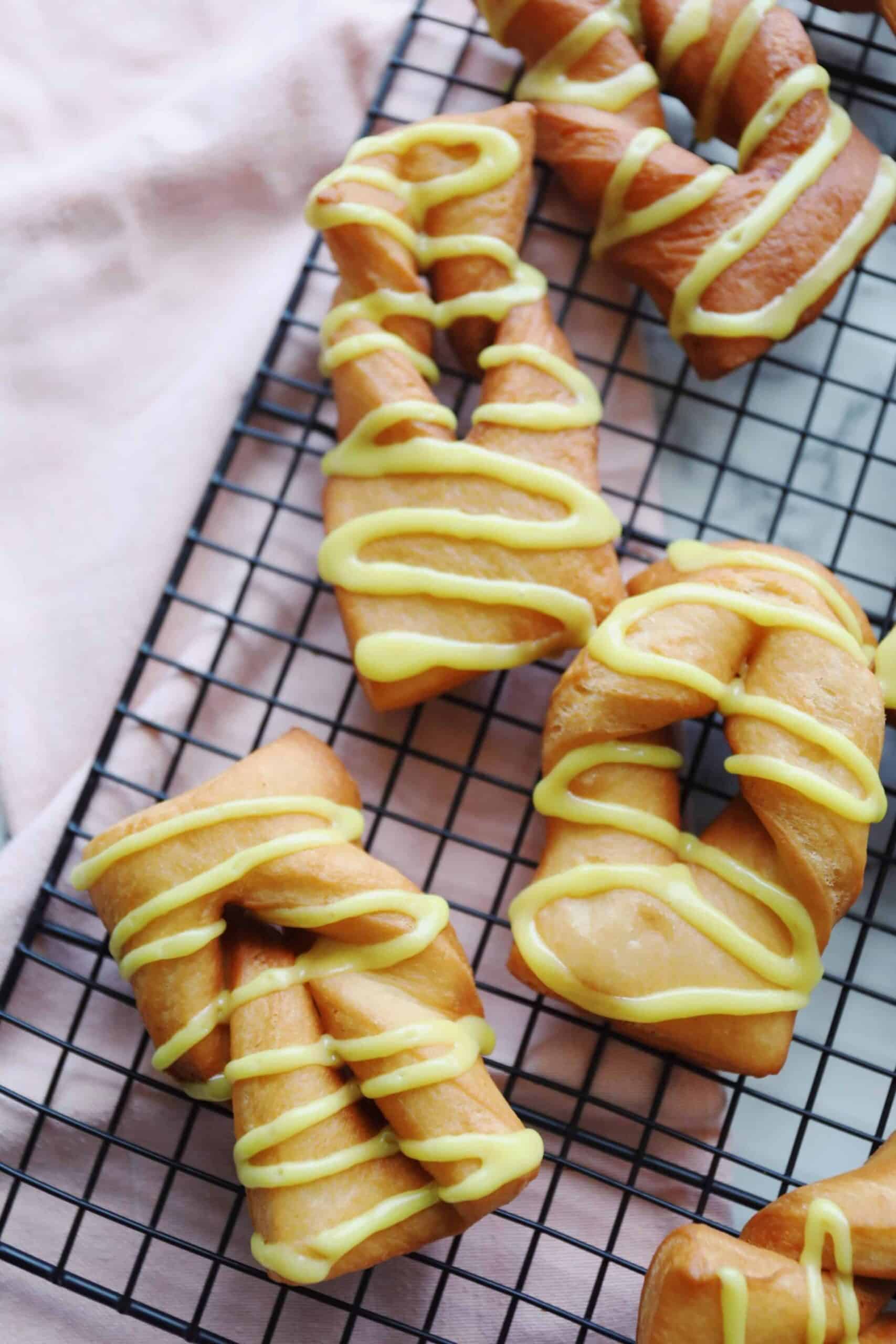
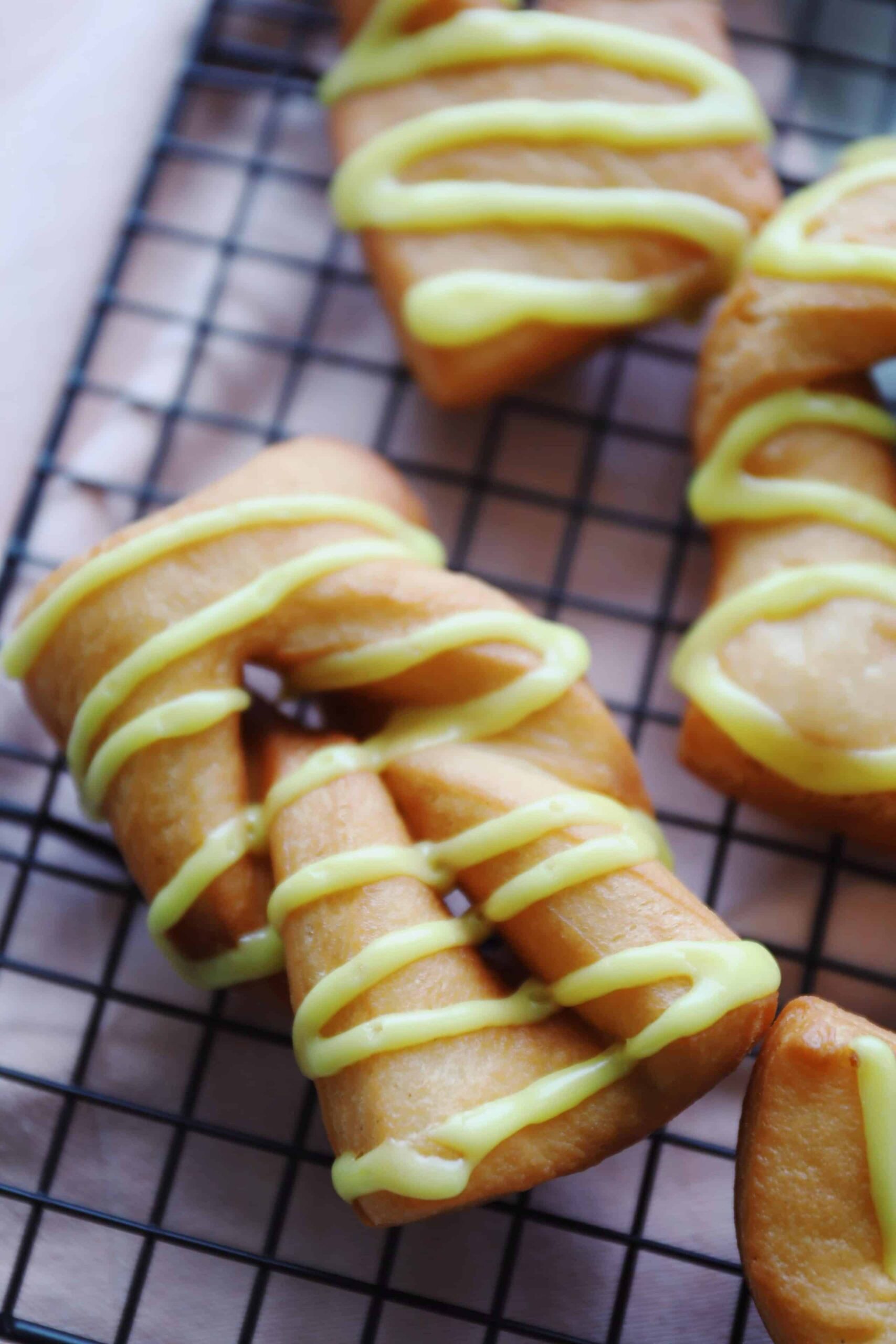
Here is the best Norwegian klejner recipe. They are big, soft klejner flavoured with cardamom, vanilla and lemon. Norwegian klejner are large, fluffy klejner made with a yeast dough with buttermilk, cardamom, vanilla and lemon zest.
There are many ways to make these Norwegian klejner, but this is my favourite. The dough is a lot like a doughnut dough, completely soft and airy on the inside and crispy on the outside.
I also have another recipe for Danish klejner, which is my grandmother’s recipe from the island of Møn. The dough is different and the klejner themselves are not as sweet. They are served with a dusting of icing sugar and jelly.
Icing for Norwegian klejner
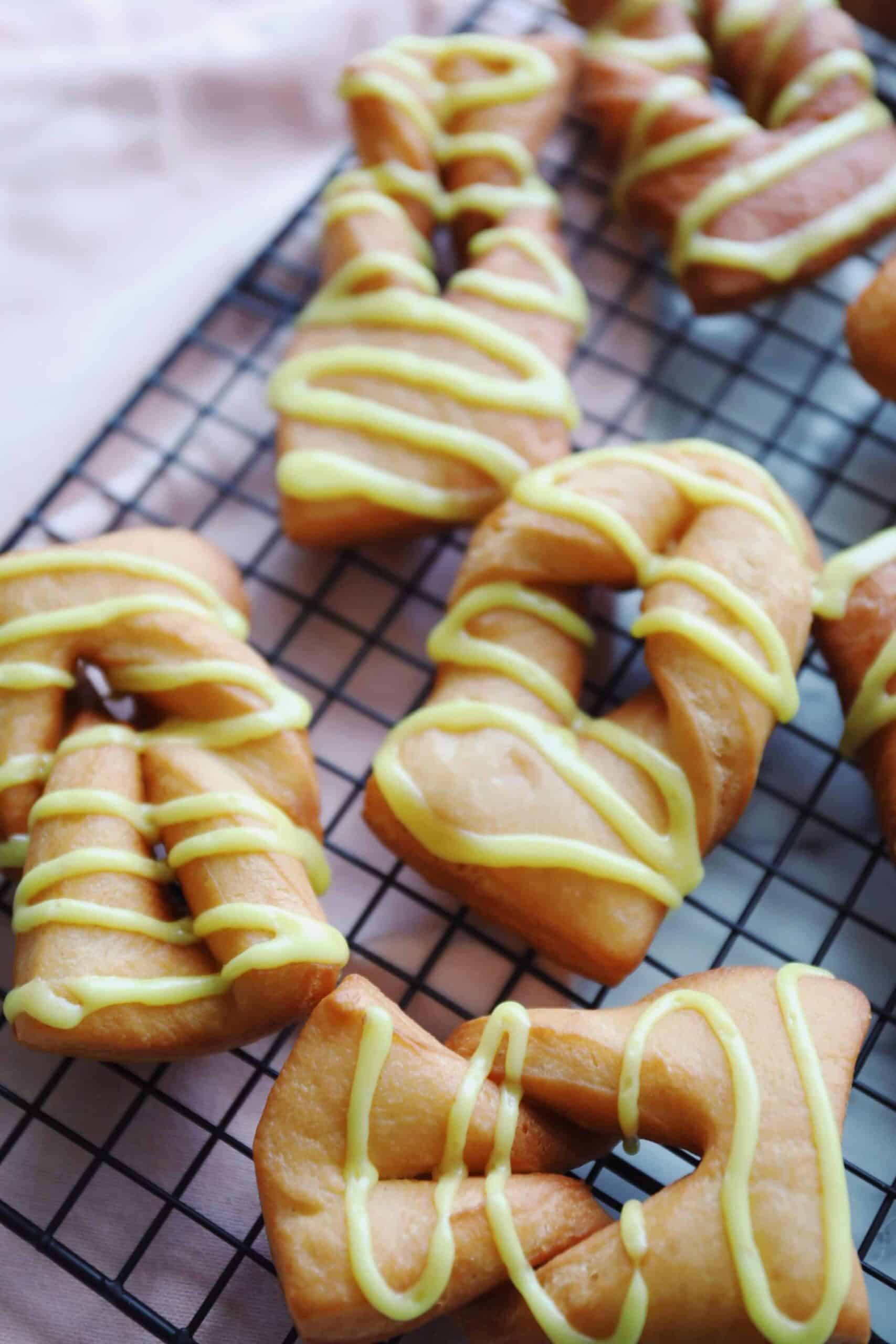
Norwegian klejner are always served with lemon icing. The icing is made with lemon juice and yellow food colouring, which gives it a beautiful yellow colour. If you are not a fan of tart lemon, you can simply leave the lemon out of the icing. You can still colour it yellow if you want the same look as mine.
The yellow icing has become the signature of Norwegian klejner. If you buy them at a Danish bakery, almost all of them will have lemon icing. It is actually really nice with something fresh and tart in the icing, when the rest of the klejne is a little richer.
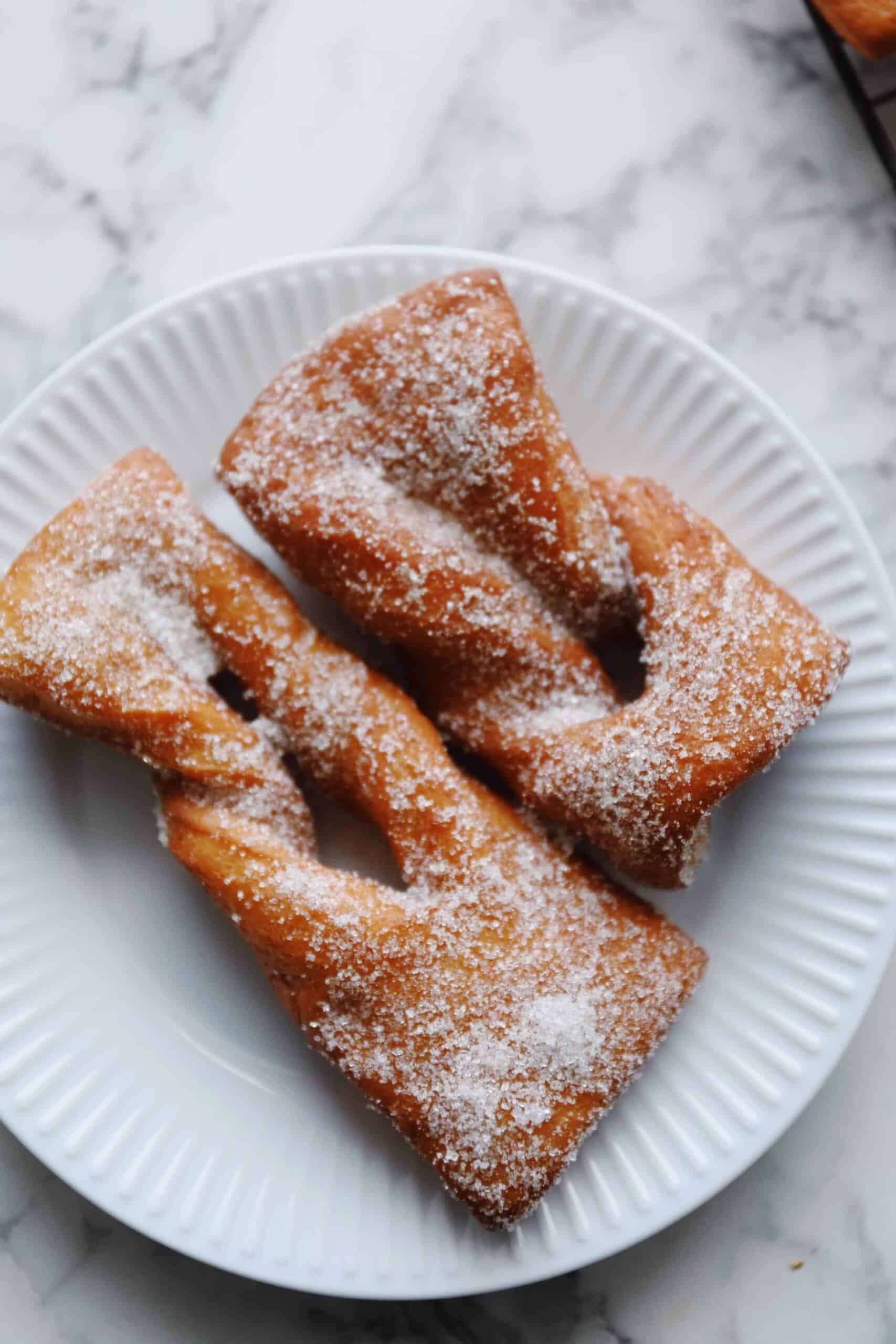
Instead of decorating the Norwegian klejner with lemon icing, you can toss the warm klejner in a mix of sugar and cardamom. It tastes wonderful! The klejner are definitely best when they are freshly fried. They keep in a cookie tin for about 2 to 3 days, but they get a little drier each day.
How to fry your big, soft klejner
I always fry my Norwegian klejner in Palmin (solid coconut fat). In the recipe I have used 1 kg, which is enough for a normal batch of klejner. If you make more than one batch, you might need a little more, as the klejner soak up some of the fat while frying.
Frying klejner in hot fat is not a job for children, but everyone can help roll out the dough and twist the Norwegian klejner. It does not matter if they are not all perfect and identical, they taste just as good!
Do not put too many klejner in the pot at once, as the fat will cool down. If the fat is nice and hot while frying, and you let the klejner drain well on kitchen paper afterwards, they will not be very greasy.
I use Palmin, but you can easily fry them in lard or a neutral oil instead. A neutral oil could be rapeseed oil or sunflower oil, which most people have at home.
There is a very simple way to check if your fat or oil is hot enough. Just take a wooden skewer and dip it into the oil. If it sizzles around the skewer, it is ready. If not, wait a little longer.
Norwegian klejner with lemon icing
Are Norwegian klejner from Norway? The funny thing is that these big, soft klejner are not from Norway at all. They are actually a Danish invention that for some reason ended up being called Norwegian klejner.
What is a klejne called in Norwegian? If you are looking for a classic klejne in Norway, you should ask for a “fattigmann” (poor man). That is simply because you need quite a few expensive ingredients to make them, so the baker ends up being a poor man.
What is the difference between Danish and Norwegian klejner? Even though their names are similar, they only have the shape and the way they are cooked in common. A Danish klejne is made from a cookie dough, while a Norwegian klejne is made from a yeast dough. Both are fried in oil or fat.

Norwegian klejner with lemon icing
Ingredients
Instructions
Dough
Melt the butter and let it cool slightly.
Add the butter and buttermilk to the bowl of a stand mixer and dissolve the yeast in it. Add the sugar, vanilla sugar, salt, cardamom, lemon zest and egg. Add the flour a little at a time while kneading the dough. Knead until the dough is smooth and glossy and comes away from the sides of the bowl. This takes about 10 minutes. Leave the dough to rise for 1 hour at room temperature, covered with a damp tea towel.
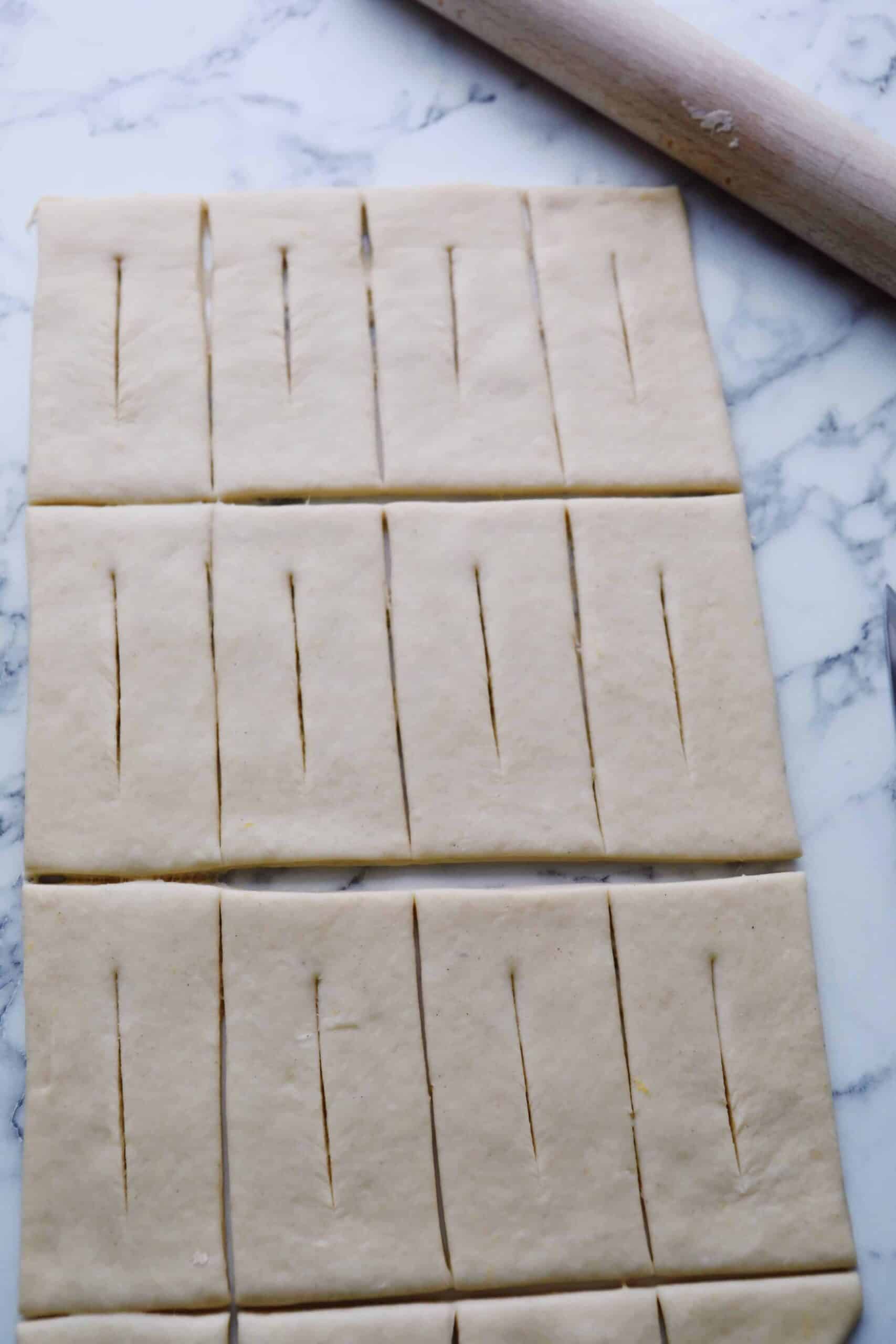
Roll the dough out on the counter to about 35 x 42 cm. The dough should ideally be firm enough that you do not need to dust the counter with flour.
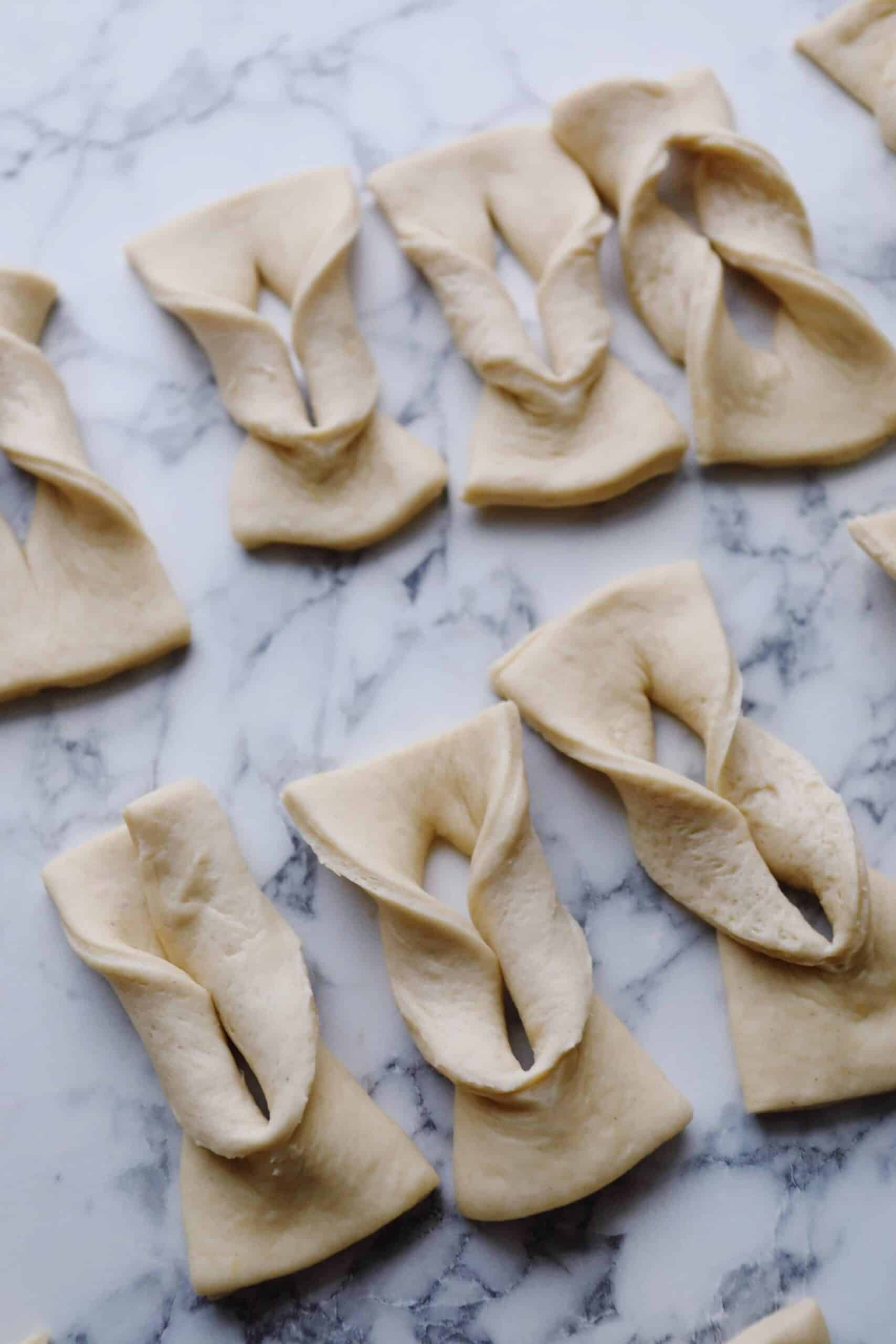
Cut the dough into about 16 rectangles of 6 x 12 cm. Make a small cut in the middle of each piece and twist the klejner (see the video above). Let the klejner rise for another 15 minutes.
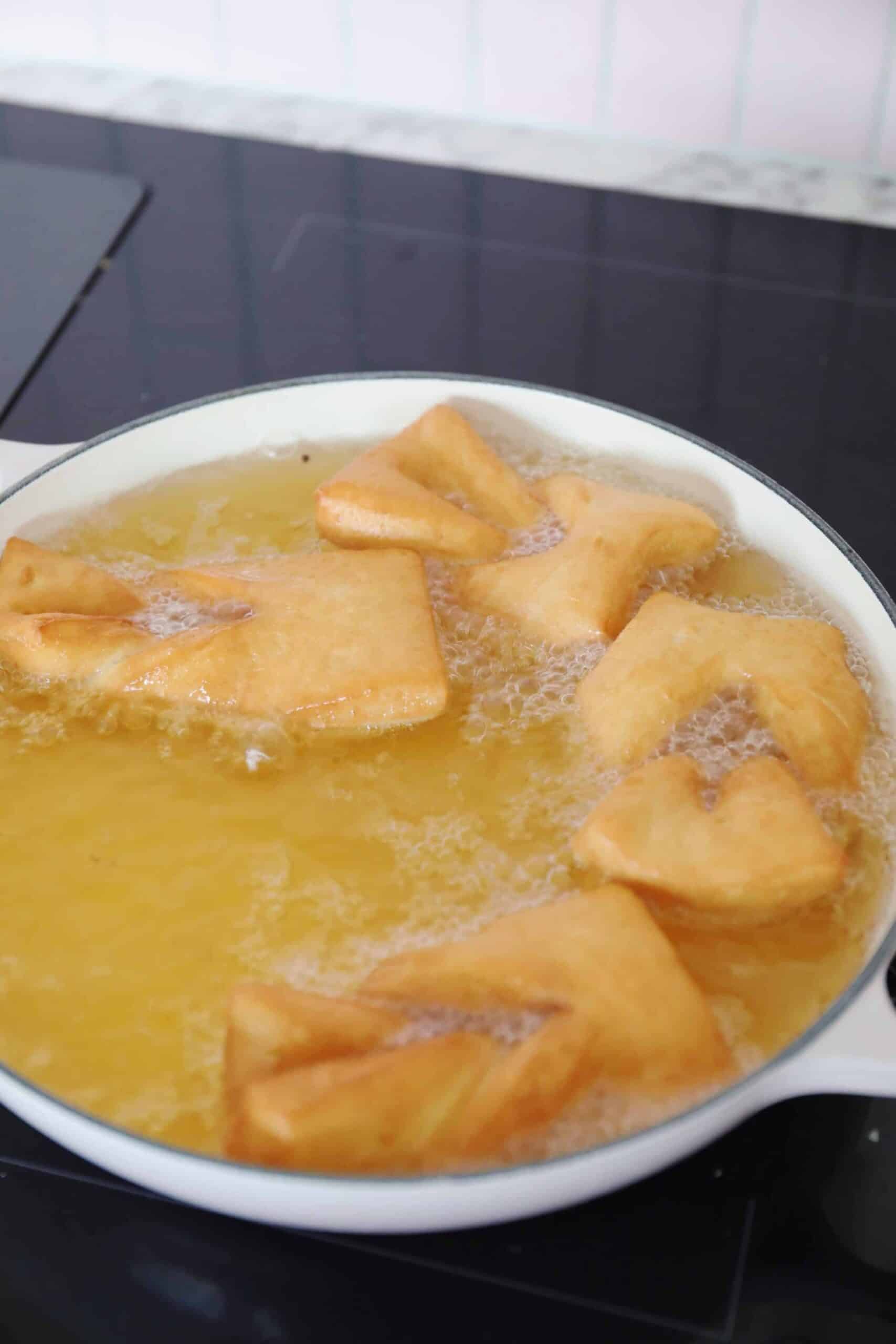
Melt the Palmin in a pot and heat it to 180°C. Check that the fat is hot enough by dipping a toothpick into it. If it sizzles and bubbles around the toothpick, it is ready.
Fry 3 to 4 klejner at a time for about 1.5 minutes on each side. Place them on a plate lined with kitchen paper to soak up the excess fat. Continue with the rest of the klejner.
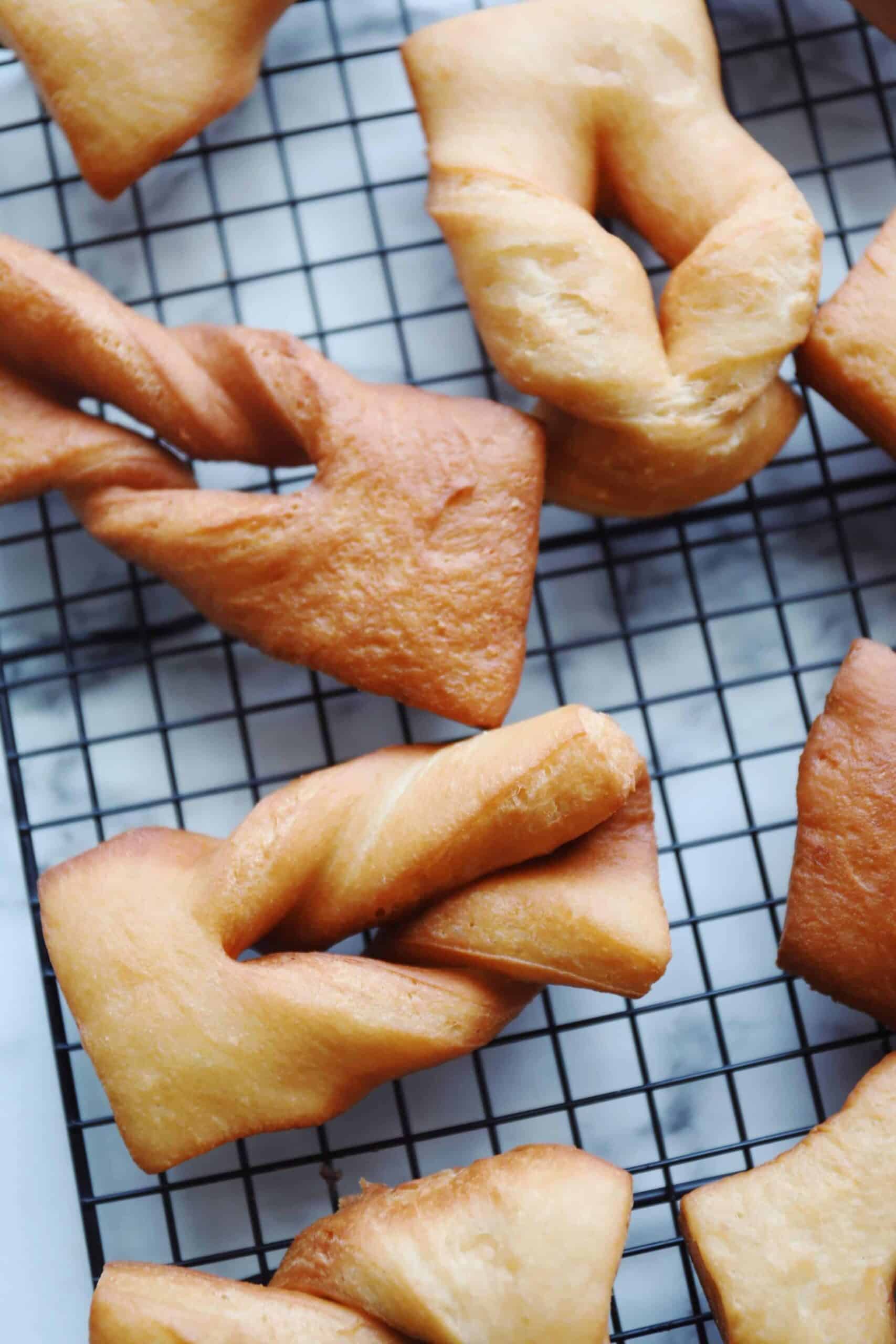
Place the klejner on a wire rack to cool.
Lemon icing
Mix the icing sugar, lemon juice and food colouring into an icing. It should not be too runny. Put the icing in a piping bag and cut a small hole in the tip. Pipe the icing onto the klejner and serve. Enjoy!
Nutritional content
-
Energy
33 kcal / 33 kj
-
Fat
33,3 gram
-
Protein
33,3 gram
-
Carbohydrates
33,3 gram


Please write a comment